What types of metal barrels are there?
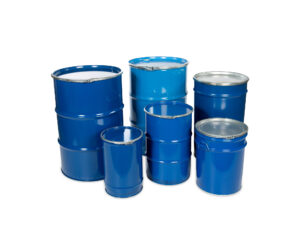
Our range includes three main types:
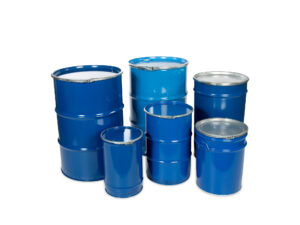
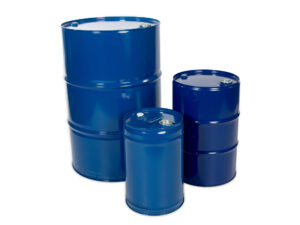
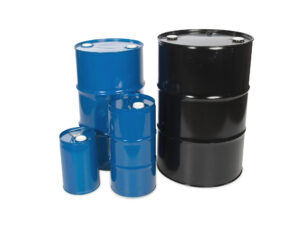
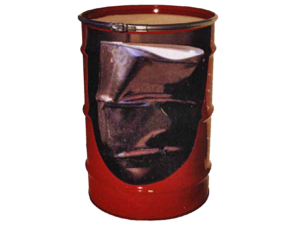
- Metal bondelvat: closed at the top with 2″ or ¾” cap openings. Suitable for liquids such as oil, antifreeze, or soap. Available with or without internal coating.
- Metal lid barrel: fully openable via a lid with clamping ring, ideal for solids and easy filling. Available with smooth walls or roll grooves, with or without coating. For food products, we always recommend a plastic liner on.
- Combivat: combination of a metal outer container and plastic inner container, extra safe and UN Liquid certified.
All metal drums are available with UN drum certification and approved for the transport of hazardous goods. We also supply reconditioned bonded barrels and reconditioned lidded containers, which are given a second life through burnout or chemical cleaning, including a new coating and quality mark.
What types of plastic barrels are available?
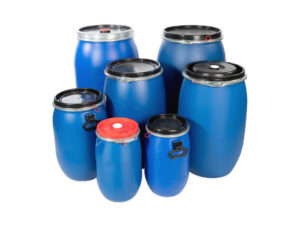
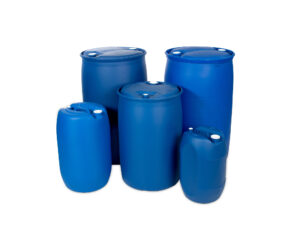
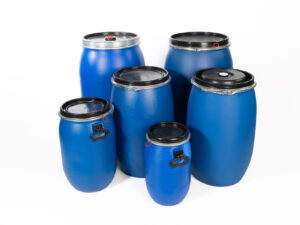
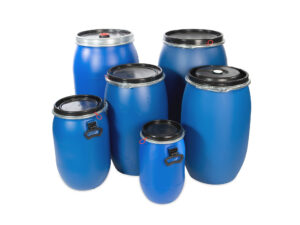
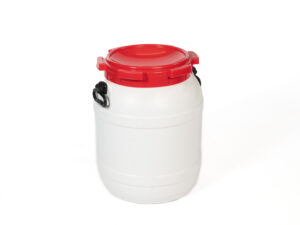
Our plastic drums are mainly made from HDPE (high-density polyethylene) and are suitable for food, chemical, and pharmaceutical applications. You can choose from:
In addition, there are also recycled plastic bondel barrels and recycled plastic lidded containers (PCR barrels), constructed from multiple layers, with virgin HDPE on the inside. Not suitable for food, but suitable for industrial applications.
Depending on your needs, you can choose a standard plastic barrel or a multi-layer one. coex barrel for extra barrier protection.
Are there cardboard barrels too?
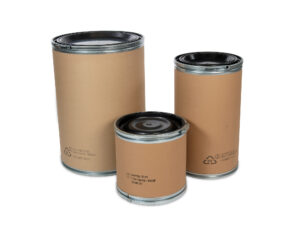
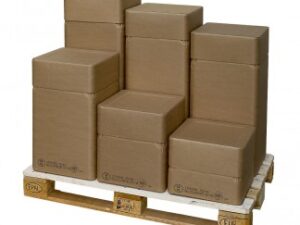
Yes. Cardboard drums (also known as fiber drums) are exceptionally light, sturdy, and recyclable. We offer two types:
Both types are available with UN certification for solids.
Are there special containers for pharmaceuticals and high-end applications?
For the pharmaceutical sector and specialty chemicals, we offer solutions with additional guarantees:
In what volumes can I purchase barrels?
Our range includes barrels in various sizes. Popular capacities are:
- 30-liter barrel
- 60-liter barrel
- 120-liter barrel
- 150-liter barrel
- 220-liter barrel
Thanks to this wide selection, you will always find the barrel that perfectly suits your application.
Can I also choose sustainable alternatives?
Certainly. In addition to new barrels, you will find:
These circular alternatives are available with or without UN certification.
Why choose Moens Packaging as your supplier of drums?
At Moens Packaging, you don't just buy a barrel, you choose a reliable partner with over 100 years of experience in industrial packaging. As wholesale barrels We have more than 4,000 different types of packaging, from small cans to large fiber drums and stainless steel barrels.
Our strengths:
- Fast delivery of barrels via just-in-time logistics and centrally located warehouses.
- Flexibility: order small print runs or large bulk purchases.
- Quality: ISO 9001:2015 certified, always in accordance with the highest safety standards.
- Sustainability: choice of reconditioned barrels, PCR barrels, and other circular solutions.
- Additional services such as sleeven, labeling and accessories, turning pallets or 3D-printed keys.
As a wholesale supplier of containers, we operate throughout Belgium, the Netherlands, Luxembourg, and France. Thanks to our wide range of products and our expertise, we always find the right solution for your sector.
Applications of barrels by sector
Which drum or barrel is right for your application? The table below shows the most suitable types for each sector, including safety and accessories. This helps you choose the right packaging more quickly and get started right away. request a quote.
| Sector |
Typical applications |
Recommended barrels |
Security & compliance |
Accessories & options |
Opinion |
| Food Industry |
Oils, syrups, flavorings, raw materials |
HDPE barrel; plastic lid container; round cardboard barrel with liner |
Food-grade coatings; UN certification if required |
Lids with clamping rings; plastic liners; seals |
Select a liner for liquid food products and work with traceable batches. |
| Chemical industry |
Acids, solvents, hazardous substances |
Metal bondelvat; metal lid barrel; combivat; stainless steel barrel |
UN drum certification; coatings tailored to product compatibility |
Cap openings 2″/¾”; capsules and keys; leak collection |
Have compatibility tested and choose combination tests for extra safety. |
| Pharmaceuticals & cosmetics |
Powders, bulk ingredients, cleaning fluids |
Curtec barrel; stainless steel barrel; plastic lid container |
Hygiene and sealing options; UN approved for solids |
Screw caps with rubber ring; seals; labeling |
Choose Curtec for traceable batches and safe stacking |
| Oils & fats |
Vegetable oils, lubricants, fats |
Metal bondelvat; plastic bondelvat; reconditioned barrel |
UN certification for liquids; liquid-tight closure |
Caps with seals; heating jackets |
Use coatings or liners to prevent migration or odor nuisance. |
| Agriculture & horti |
Fertilizers, crop protection, supplements |
Plastic barrel; PCR barrel; coex barrel |
Crop protection regulations; UN certification for liquids |
Quick connectors; caps with venting |
For volatile products: dissipative or antistatic versions |
| Industry & export |
Cleaning agents, additives, process fluids |
Square cardboard barrels; fiber drums; metal lidded drums for bulk solids |
UN certification depends on contents; export labels and documentation |
Pallet selection (wood or plastic); stackable shapes; seals |
Choose square cardboard drums or fiber drums to maximize pallet space and reduce transport costs. |
Frequently asked questions about barrels and drums
How do I choose the right barrel volume (30, 60, 120, 150, or 220 liters)?
The choice depends on your application and logistics. A 30-liter or 60-liter drum is ideal for smaller batches, test productions, or valuable raw materials. 120-liter and 150-liter drums are often chosen for medium-sized transports, while 220-liter drums are the standard for bulk storage and export. At Moens, we advise you on the most cost-efficient capacity for your sector.
What is the difference between a combivat and a coex barrel?
A combivat combines a metal outer shell with a plastic inner container: perfect for safety and chemical resistance. A coex drum is a plastic multilayer drum (usually HDPE) with a barrier layer (PE/PA or EVOH), designed to prevent migration and evaporation. Both solutions are UN-approved, but the choice depends on chemical compatibility and the type of product.
Are recycled plastic containers (PCR containers) suitable for food?
No. Recycled plastic drums often consist of multiple layers, with only the inner layer being virgin HDPE. They are UN-approved and suitable for chemical and industrial applications, but virgin or food-grade HDPE is always recommended for food.
How are reconditioned metal drums treated?
A reconditioned drum undergoes a rigorous process: cleaning, burning out or chemical cleaning, steel blasting, dent removal, and application of a new protective coating. This gives the drum a second life. Afterwards, it can once again carry a UN mark, just like a new drum.
Are fiber drums or cardboard drums sturdy enough for export?
Yes. Both round cardboard drums and square cardboard drums are UN-approved for solids and can be transported safely internationally. The square version has the added advantage of saving space on pallets, thereby reducing transport costs.
Which containers are suitable for pharmaceutical products?
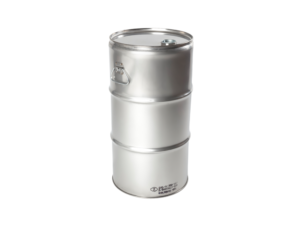
Curtec drums with screw caps and stainless steel drums are particularly suitable for pharmaceutical applications. Curtec guarantees traceability and safe stacking, while stainless steel drums are resistant to aggressive products and can be cleaned hygienically.
How do I recognize a UN drum and what does the coding mean?
Each UN drum has a marking, for example 1A1, 1A2, or 1H2. These codes indicate the type of material and construction:
- 1A1 = metal bondelvat (closed)
- 1A2 = metal lid container (with removable lid)
- 1H2 = plastic lid container (HDPE)
In addition, the codes provide information about the packaging group (X, Y, Z), the year, and the approval.
Can I have my barrels personalized?
Yes. Moens offers the option of adding labels, sleeves, or even laser markings to caps on barrels. This increases traceability and brand identity. For pharmaceutical and chemical customers, unique numbering per batch can also be added.
What is the difference between a reconditioned barrel and a recycled barrel?
Reconditioned barrel = an existing barrel that has been thoroughly cleaned and repaired for reuse.
Recycled barrel = a new barrel, partly made from Post-Consumer Recycled (PCR) material.
Are there testing facilities for barrels in extreme conditions?
Yes. Moens has a climate chamber that can be used to test barrels at high temperatures and humidity levels, for example for export to Africa or the Middle East. This ensures that your packaging remains stable.
Can Moens also supply small quantities of barrels?
Yes. Although we are a wholesale supplier of barrels, you can also order smaller quantities. This is interesting for SMEs, test productions, or start-ups that do not want to build up a large stock.
Which cap openings and screw threads should I choose for my barrels?
For bonded barrels, 2″ and ¾” cap openings are standard. Pay attention to the thread (e.g., S70/6) and choose adapters that match your tap or filling system. Tamper-evident caps and barrel keys are useful for quick changes.
Can I stack barrels, and how high?
Yes, provided you comply with the UN stacking test for the selected container. Use flat pallets, secure with straps/film, and avoid point loads. Rollers on metal lidded containers increase structural stability when stacking.
Which pallet is most suitable for my shipment?
Wooden pallets are cost-effective and widely available; ISPM-15 treatment may be required for export outside the EU. Plastic pallets are dimensionally stable, hygienic, and useful in wet production environments or return flows.
How can I limit odor or product migration?
Choose a container with barrier properties (coex) or a specific inner coating. For critical media, stainless steel containers or a liner with the right barrier layer are recommended. This will prevent permeation and loss of quality.
What if my product is viscous or may solidify?
Use a heating jacket or temperature-controlled storage, choose a drum with a large opening for easy emptying, and install a tap/valve that is calibrated for viscosity. This limits residual loss and reduces unloading times.
What documentation will I receive for technical or regulated shipments?
UN certificates, material and compatibility data sheets, and—where applicable—food contact declarations are available. Upon request, we provide batch labels and seal numbers for traceability.
Do you offer return or reconditioning services for barrels?
Yes. We can set up return flows and have drums reconditioned or selectively replaced. This reduces your TCO, minimizes waste streams, and maintains quality standards in your supply chain.
Are there dissipative or antistatic containers for powders and solvents?
For dust- or vapor-sensitive processes, we provide antistatic versions and accessories (liners, caps, grounding). This reduces the risk of electrostatic discharge in ATEX-sensitive environments.